
Imagine building a car chassis without a blueprint or even a list of recommended construction materials. In a sense, that's precisely what a team of engineers at the NASA Goddard Space Flight Center in Greenbelt, Md., did when they designed a one-of-a-kind structure that is one of 9 key new technology systems of the Integrated Science Instrument Module (ISIM). Just as a chassis supports the engine and other components in a car, the ISIM will hold four highly sensitive instruments, electronics, and other shared instrument systems flying on the James Webb Space Telescope, NASA's next flagship observatory.
From scratch without past experience to help guide them the engineers designed the ISIM made of a never-before-manufactured composite material and proved through testing that it could withstand the super-cold temperatures it would encounter when the observatory reached its orbit 1.5-million kilometers (930,000 miles) from Earth. In fact, the ISIM structure survived temperatures that plunged as low as 27 Kelvin , colder than the surface of Pluto. "It is the first large, bonded composite spacecraft structure to be exposed to such a severe environment," said Jim Pontius, ISIM lead mechanical engineer.
The 26-day test was specifically carried out to test whether the car-sized structure contracted and distorted as predicted when it cooled from room temperature to the frigid very important since the science instruments must maintain a specific location on the structure to receive light gathered by the telescope's 6.5-meter (21.3-feet) primary mirror. If the structure shrunk or distorted in an unpredictable way due to the cold, the instruments no longer would be in position to gather data about everything from the first luminous glows following the big bang to the formation of star systems capable of supporting life.

Amateur astronomers using backyard telescopes were the first to detect two small objects that burned up in Jupiter’s atmosphere on June 3 and Aug. 20. Professional astronomers at NASA and other institutions followed up on the discovery and gathered detailed information on the objects, which produced bright spots on Jupiter. The object that caused the June 3 fireball was estimated to be 30 to 40 feet in diameter - comparable in size to asteroid 2010 RF12 that flew by Earth on Sept. 8. The June 3 fireball released five to 10 times less energy than the 1908 Tunguska meteoroid, which exploded 4-6 miles above Earth’s surface with a powerful burst that knocked down millions of trees in a remote part of Russia. Scientists continue to analyze the Aug. 20 fireball, but think it was comparable to the June 3 object.
“Jupiter is a big gravitational vacuum cleaner,” said Glenn Orton, an astronomer at NASA’s Jet Propulsion Laboratory (JPL) in Pasadena, Calif., and co-author of a paper that will appear online Thursday in Astrophysical Journal Letters. “It is clear now that relatively small objects that are remnants from the formation of the solar system 4.5 billion years ago still hit Jupiter frequently. Scientists are trying to figure out just how frequently.” The lead author of the paper in Astrophysical Journal Letters is Ricardo Hueso of the Universidad del Pais Vasco in Bilbao, Spain. Before amateurs spotted the June 3 impact, scientists were unaware collisions that small could be observed. Anthony Wesley, an amateur astronomer from Australia who discovered a dark spot on Jupiter in July 2009, was the first to see the tiny flash on June 3.
Amateur astronomers had trained their backyard telescopes on Jupiter that day because the planet was in a particularly good position for viewing. Wesley was watching real-time video from his telescope when he saw a 2.5-second-long flash of light near the edge of the planet. “It was clear to me straight away it had to be an event on Jupiter,” Wesley said. Another amateur astronomer, Christopher Go, of Cebu, Philippines, confirmed the flash also appeared in his recordings. Professional astronomers, alerted by email, looked for signs of the impact in images from larger telescopes, including NASA’s Hubble Space Telescope, the European Southern Observatory’s Very Large Telescope in Chile, and Gemini Observatory telescopes in Hawaii and Chile. Scientists saw no thermal disruptions or typical chemical signatures of debris, which allowed them to put a limit on the size of the object.
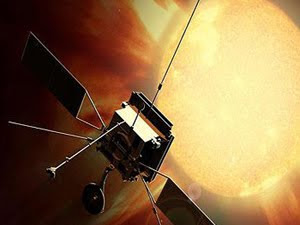 NASA has begun development of a mission to visit and study the sun closer than ever before. The unprecedented project, named Solar Probe Plus, is slated to launch no later than 2018. The small car-sized spacecraft will plunge directly into the sun's atmosphere approximately four million miles from our star's surface. It will explore a region no other spacecraft ever has encountered. NASA has selected five science investigations that will unlock the sun's biggest mysteries. "The experiments selected for Solar Probe Plus are specifically designed to solve two key questions of solar physics why is the sun's outer atmosphere so much hotter than the sun's visible surface and what propels the solar wind that affects Earth and our solar system? " said Dick Fisher.
As the spacecraft approaches the sun, its revolutionary carbon-composite heat shield must withstand temperatures exceeding 2550 degrees Fahrenheit and blasts of intense radiation. The spacecraft will have an up close and personal view of the sun enabling scientists to better understand, characterize and forecast the radiation environment for future space explorers. NASA invited researchers in 2009 to submit science proposals. Thirteen were reviewed by a panel of NASA and outside scientists. The total dollar amount for the five selected investigations is approximately $180 million for preliminary analysis, design, development and tests.The selected proposals are:
Solar Wind Electrons Alphas and Protons Investigation: principal investigator, Justin C. Kasper, Smithsonian Astrophysical Observatory in Cambridge, Mass. This investigation will specifically count the most abundant particles in the solar wind electrons, protons and helium ions and measure their properties. The investigation also is designed to catch some of the particles in a special cup for direct analysis. Wide-field Imager: principal investigator, Russell Howard, Naval Research Laboratory in Washington. This telescope will make 3-D images of the sun's corona, or atmosphere. The experiment actually will see the solar wind and provide 3-D images of clouds and shocks as they approach and pass the spacecraft. This investigation complements instruments on the spacecraft providing direct measurements by imaging the plasma the other instruments sample.
NASA has begun development of a mission to visit and study the sun closer than ever before. The unprecedented project, named Solar Probe Plus, is slated to launch no later than 2018. The small car-sized spacecraft will plunge directly into the sun's atmosphere approximately four million miles from our star's surface. It will explore a region no other spacecraft ever has encountered. NASA has selected five science investigations that will unlock the sun's biggest mysteries. "The experiments selected for Solar Probe Plus are specifically designed to solve two key questions of solar physics why is the sun's outer atmosphere so much hotter than the sun's visible surface and what propels the solar wind that affects Earth and our solar system? " said Dick Fisher.
As the spacecraft approaches the sun, its revolutionary carbon-composite heat shield must withstand temperatures exceeding 2550 degrees Fahrenheit and blasts of intense radiation. The spacecraft will have an up close and personal view of the sun enabling scientists to better understand, characterize and forecast the radiation environment for future space explorers. NASA invited researchers in 2009 to submit science proposals. Thirteen were reviewed by a panel of NASA and outside scientists. The total dollar amount for the five selected investigations is approximately $180 million for preliminary analysis, design, development and tests.The selected proposals are:
Solar Wind Electrons Alphas and Protons Investigation: principal investigator, Justin C. Kasper, Smithsonian Astrophysical Observatory in Cambridge, Mass. This investigation will specifically count the most abundant particles in the solar wind electrons, protons and helium ions and measure their properties. The investigation also is designed to catch some of the particles in a special cup for direct analysis. Wide-field Imager: principal investigator, Russell Howard, Naval Research Laboratory in Washington. This telescope will make 3-D images of the sun's corona, or atmosphere. The experiment actually will see the solar wind and provide 3-D images of clouds and shocks as they approach and pass the spacecraft. This investigation complements instruments on the spacecraft providing direct measurements by imaging the plasma the other instruments sample.
 Unicorns and roses are usually the stuff of fairy tales, but a new cosmic image taken by NASA's Wide-field Infrared Explorer (WISE) shows the Rosette nebula located within the constellation Monoceros, or the Unicorn. This flower-shaped nebula, also known by the less romantic name NGC 2237, is a huge star-forming cloud of dust and gas in our Milky Way galaxy. Estimates of the nebula's distance vary from 4,500 to 5,000 light-years away. At the center of the flower is a cluster of young stars called NGC 2244. The most massive stars produce huge amounts of ultraviolet radiation, and blow strong winds that erode away the nearby gas and dust, creating a large, central hole.
The radiation also strips electrons from the surrounding hydrogen gas, ionizing it and creating what astronomers call an HII region. Although the Rosette nebula is too faint to see with the naked eye, NGC 2244 is beloved by amateur astronomers because it is visible through a small telescope or good pair of binoculars. The English astronomer John Flamsteed discovered the star cluster NGC 2244 with a telescope around 1690, but the nebula itself was not identified until John Herschel observed it almost 150 years later. The streak seen at lower left is the trail of a satellite, captured as WISE snapped the multiple frames that make up this view.
This image is a four-color composite created by all four of WISE's infrared detectors. Color is representational: blue and cyan represent infrared light at wavelengths of 3.4 and 4.6 microns, which is dominated by light from stars. Green and red represent light at 12 and 22 microns, which is mostly light from warm dust. JPL manages the Wide-field Infrared Survey Explorer for NASA's Science Mission Directorate, Washington. The principal investigator, Edward Wright, is at UCLA. The mission was competitively selected under NASA's Explorers Program managed by the Goddard Space Flight Center, Greenbelt, Md. The science instrument was built by the Space Dynamics Laboratory, Logan, Utah, and the spacecraft was built by Ball Aerospace & Technologies Corp., Boulder, Colo.
Unicorns and roses are usually the stuff of fairy tales, but a new cosmic image taken by NASA's Wide-field Infrared Explorer (WISE) shows the Rosette nebula located within the constellation Monoceros, or the Unicorn. This flower-shaped nebula, also known by the less romantic name NGC 2237, is a huge star-forming cloud of dust and gas in our Milky Way galaxy. Estimates of the nebula's distance vary from 4,500 to 5,000 light-years away. At the center of the flower is a cluster of young stars called NGC 2244. The most massive stars produce huge amounts of ultraviolet radiation, and blow strong winds that erode away the nearby gas and dust, creating a large, central hole.
The radiation also strips electrons from the surrounding hydrogen gas, ionizing it and creating what astronomers call an HII region. Although the Rosette nebula is too faint to see with the naked eye, NGC 2244 is beloved by amateur astronomers because it is visible through a small telescope or good pair of binoculars. The English astronomer John Flamsteed discovered the star cluster NGC 2244 with a telescope around 1690, but the nebula itself was not identified until John Herschel observed it almost 150 years later. The streak seen at lower left is the trail of a satellite, captured as WISE snapped the multiple frames that make up this view.
This image is a four-color composite created by all four of WISE's infrared detectors. Color is representational: blue and cyan represent infrared light at wavelengths of 3.4 and 4.6 microns, which is dominated by light from stars. Green and red represent light at 12 and 22 microns, which is mostly light from warm dust. JPL manages the Wide-field Infrared Survey Explorer for NASA's Science Mission Directorate, Washington. The principal investigator, Edward Wright, is at UCLA. The mission was competitively selected under NASA's Explorers Program managed by the Goddard Space Flight Center, Greenbelt, Md. The science instrument was built by the Space Dynamics Laboratory, Logan, Utah, and the spacecraft was built by Ball Aerospace & Technologies Corp., Boulder, Colo.
View this site :
Property auctions
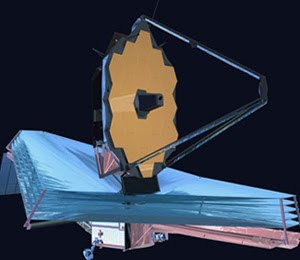
It takes years to bring a real large space telescope from basic concept to hardware reality. First, a scientist comes up with an idea to study some aspect of the Earth or the cosmos. The idea is discussed, reviewed and developed by committees of scientists. It is proposed to NASA, who makes decisions on what missions to go forth on, and which missions to pass on. If a mission is selected for study a timeline is created to develop the mission. One of the most difficult aspects of creating a new mission is convincing others to fund it. Once a mission is funded, the team of scientists and engineers "pitching" the mission can then investigate how it could come together.
Later, NASA usually selects a prime contractor to help design the telescope and other systems that will fly on the satellite. Northrop Grumman was selected to build components for the Webb telescope. The instruments, or cameras, on the telescope are selected as well, with teams of scientists to watch over the design. The design process usually includes a number of different designs, which are all tested to see which would yield the best result for the type of object the instrument would study. For example, various types of infrared cameras may be developed and tested, and the one that gives a scientist the best result, would be chosen to be built as a test unit.
Engineering test units, or ETUs are created before an actual instrument is built, so that engineers and scientists can make sure it would work properly. ETUs are a replica of the flight unit that can perform certain flight functions for testing purposes. ETUs are also used when engineers are practicing installation of an instrument into a satellite's mainframe or "bus." The outcome of the tests on ETUs may lead to a change in handling procedures of the actual flight instrument, but not a change in its flight construction. Once the ETUs test successful, then the actual instruments that will fly aboard a satellite or space telescope can be manufactured.
View this site :
Property auctions

NASA's Wide-field Infrared Survey Explorer, or WISE, is warming up. Team members say the spacecraft is running out of the frozen coolant needed to keep its heat-sensitive instrument chilled.The telescope has two coolant tanks that keep the spacecraft's normal operating temperature at 12 Kelvin. The outer, secondary tank is now depleted, causing the temperature to increase. One of WISE's infrared detectors, the longest-wavelength band most sensitive to heat, stopped producing useful data once the telescope warmed to 31 Kelvin. The primary tank still has a healthy supply of coolant, and data quality from the remaining infrared detectors remains high.
WISE completed its primary mission, a full scan of the entire sky in infrared light, on July 17, 2010. The mission has taken more than 1.5 million snapshots so far, uncovering hundreds of millions of objects, including asteroids, stars and galaxies. It has discovered more than 29,000 new asteroids to date, more than 100 near-Earth objects and 15 comets. WISE is continuing a second survey of about one-half the sky as originally planned. It's possible the remaining coolant will run out before that scan is finished. Scientists say the second scan will help identify new and nearby objects, as well as those that have changed in brightness. It could also help to confirm oddball objects picked up in the first scan.
NASA's Jet Propulsion Laboratory, Pasadena, Calif., manages the Wide-field Infrared Survey Explorer for NASA's Science Mission Directorate, Washington. The principal investigator, Edward Wright, is at UCLA. The mission was competitively selected under NASA's Explorers Program, managed by the Goddard Space Flight Center, Greenbelt, Md. The science instrument was built by the Space Dynamics Laboratory, Logan, Utah, and the spacecraft was built by Ball Aerospace & Technologies Corp., Boulder, Colo. Science operations and data processing take place at the Infrared Processing and Analysis Center at the California Institute of Technology in Pasadena. Caltech manages JPL for NASA.
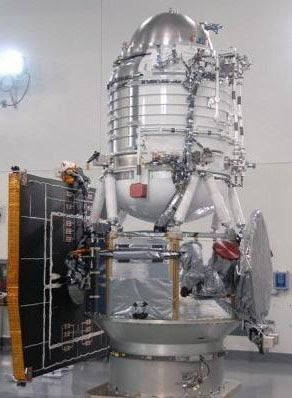
NASA's Wide-field Infrared Survey Explorer, or WISE, will complete its first survey of the entire sky on July 17. The mission has generated more than one million images so far, of everything from asteroids to distant galaxies. "Like a globe-trotting shutterbug, WISE has completed a world tour with 1.3 million slides covering the whole sky," said Edward Wright, the principal investigator of the mission at the University of California, Los Angeles.
Some of these images have been processed and stitched together into a new picture being released today. It shows the Pleiades cluster of stars, also known as the Seven Sisters, resting in a tangled bed of wispy dust. The pictured region covers seven square degrees, or an area equivalent to 35 full moons, highlighting the telescope's ability to take wide shots of vast regions of space.
The new picture was taken in February. It shows infrared light from WISE's four detectors in a range of wavelengths. This infrared view highlights the region's expansive dust cloud, through which the Seven Sisters and other stars in the cluster are passing. Infrared light also reveals the smaller and cooler stars of the family.

NASA and Microsoft Research are bringing Mars to life with new features in the WorldWide Telescope software that provide viewers with a high-resolution 3-D map of the Red Planet. Microsoft's online virtual telescope explores the universe using images NASA spacecraft return from other worlds. Teams at NASA's Ames Research Center in Moffett Field, Calif., and Microsoft in Redmond, Wash., jointly developed the software necessary to make NASA's planetary data available in WorldWide Telescope.
"By providing the Mars dataset to the public on the WorldWide Telescope platform, we are enabling a whole new audience to experience the thrill of space," said Chris C. Kemp, chief technology officer for information technology at NASA Headquarters in Washington. The fully-interactive images and new NASA data will allow viewers to virtually explore Mars and make their own scientific discoveries. New features include the highest resolution fully interactive map of Mars ever created, realistic 3-D renderings of the surface of the planet and video tours with two NASA scientists, James Garvin of NASA's Goddard Space Flight Center in Greenbelt, Md., and Carol Stoker of Ames.
Garvin's tour walks viewers through the geological history of Mars and discusses three possible landing sites for human missions there. Each landing site highlights a different geological era of the planet. Stoker's tour addresses the question "Is there life on Mars?" and describes the findings of NASA's Mars Phoenix Lander. "Our hope is that this inspires the next generation of explorers to continue the scientific discovery process," said Ames Center Director S. Pete Worden.

NASA's Transition Region And Coronal Explorer, known as TRACE, conducted its final observations of the sun on June 21. Although launched on April Fools' Day, 1998, TRACE quickly proved its worth, observing – for the first time - an entire cycle of solar activity and imaging dynamic coronal phenomena. TRACE provided images at five times the magnification of those taken by the Extreme Ultraviolet Imaging Telescope Instrument aboard the Solar and Heliospheric Observatory (SOHO).
Many details of the fine structure of the corona were observed for the first time. Early in its mission, it discovered the fine-scale magnetic features where enhanced heating occurs at the footpoints of coronal loop systems in solar active regions, which later became known as "coronal moss." In 2001, TRACE observations of astonishing coronal activity were highlighted in the IMAX movie SolarMax.
High spatial resolution observations of the solar corona are now being carried out by NASA''s newest eye on the sun, the Solar Dynamics Observatory, a Goddard-built spacecraft managed by the Science Mission Directorate's Heliophysics Division. SDO's field of view is much larger than TRACE, so that the entire disk of the sun, not a small area, is imaged in every observation.
 NASA's Kepler Mission has released 43 days of science data on more than 156,000 stars. These stars are being monitored for subtle brightness changes as part of an ongoing search for Earth-like planets outside of our solar system. Astronomers will use the new data to determine if orbiting planets are responsible for brightness variations in several hundred stars. These stars make up a full range of temperatures, sizes and ages.
Many of them are stable, while others pulsate. Some show starspots, which are similar to sunspots, and a few produce flares that would sterilize their nearest planets. Kepler, a space observatory, looks for the data signatures of planets by measuring tiny decreases in the brightness of stars when planets cross in front of, or transit them. The size of the planet can be derived from the change in the star's brightness.
The 28-member Kepler science team also is using ground-based telescopes and the Hubble Space Telescope and Spitzer Space Telescope to perform follow-up observations on a specific set of 400 objects of interest. The star field that Kepler observes in the constellations Cygnus and Lyra can only be seen from ground-based observatories in spring through early fall. The data from these other observations will determine which of the candidates can be identified as planets. That data will be released to the scientific community in February 2011.


