
The Multilateral Coordination Board (MCB) for the International Space Station partner agencies met Wednesday, April 27, to discuss increased efforts to use the station as a test-bed for exploration. The MCB also congratulated the European Space Agency (ESA) on its recent decision to continue station operations to at least 2020. The MCB is working diligently to extend the benefits to future exploration beyond low-Earth orbit through enhanced station research, technology development and other opportunities. Other topics on the agenda included a report on efforts to create international standards for docking and berthing; rendezvous and proximity operations; interfaces for replaceable items and payloads; and standardization of command protocols for spacecraft.
Station research with potential societal impact includes:
-- The Alpha Magnetic Spectrometer-2, which will fly aboard STS-134, scheduled to launch on April 29. The experiment is a cosmic ray detector that will search for dark matter and antimatter, components critical to understanding the origin and structure of our universe.
-- The Canadian Space Agency (CSA) continues its life science research program on mitigating health risks associated with spaceflight. These health experiments and activities will monitor crew health and deliver health care on space missions.
-- ESA began the GeoFlow experiment in the Fluid Science Laboratory payload. This experiment will take advantage of the microgravity environment on the station in combination with electrical fields, thermal gradients and rotation to simulate many parameters of geo-physical flows under the Earth's crust. Results will help scientists understand thermal convection in planets and the outer shells of celestial bodies. It also will verify numerical simulations of fluid dynamics of liquid core planets with real experimental data.
-- Roscosmos, the Russian Federal Space Agency, continues experimental programs aimed at human adaptation to future long- term expeditions. Dedicated medical experiments study the effects of flight conditions on the cardiovascular system, respiratory system and bones. Other research includes planting wheat and vegetables them performing genetic, microbiological and biochemical tests on the plants.

Arriving in their trademark T-38 Talon jets, the crew that will fly the final mission of the space shuttle Discovery inwards at NASA’s Kennedy Space Center in Florida. The astronauts landed at the Shuttle Landing Facility (SLF) at 3:45 p.m. EDT and took a little moments to speak to members of the media and pose for pictures before heading off to train for their 11-day mission. Discovery is now slated to begin its mission to the International Space Station (ISS) with liftoff taking place at 4:50 p.m. EDT Thursday, Feb. 24. The STS-133 mission is Discovery’s last planned flight.
However, STS-132, which took place this past May, was shuttle Atlantis’ final planned flight now that orbiter is scheduled to close out the shuttle program when it whole mission STS-135, which is scheduled to take place late this summer. The crew will convey the Leonardo Permanent Multipurpose Module (PMM) to the space station. The PMM was customized from the Multi-Purpose Logistics Module (MPLM) Leonardo which was fundamentally a cargo container. Now, Leonardo will be a permanent fixture on the orbiting outpost given that additional storage for the station’s crew. On the way to orbit, the PMM will carry, among further things, the first human-like robot ever flown in space, Robonaut 2 (R2).
R2 will stay onboard the place and will be used to test the viability of related robots in assisting astronauts on future long-duration missions. One of the things that the station can forever use is more spare parts. STS-133 will deliver various division and the Express Logistics Carrier 4, a platform that holds great equipment. The crew consists of Commander Steve Lindsey, Pilot Eric Boe and Mission expert Alvin Drew, Steve Bowen, Michael Barratt and Nicole Stott. Bowen is a final minute addition to the crew.

NASA has taken the next step toward a new generation of Deep Space Network antennas. A $40.7 million contract with General Dynamics SATCOM Technologies, San Jose, Calif., covers implementation of two additional 34-meter (112-foot) antennas at Canberra, Australia. This is part of Phase I of a plan to eventually retire the network's aging 70-meter-wide antennas. The Deep Space Network (DSN) consists of three communications complexes: in Goldstone, Calif.; Madrid, Spain; and Canberra, Australia. The 70-meter antennas are more than 40 years old and are showing signs of surface deterioration from constant use. Additional 34-meter antennas are being installed in Canberra in the first phase; subsequent phases will install additional 34-meter antennas in Goldstone and Madrid.
The 34-meter beam waveguide antennas are essential to keep communications flowing smoothly as NASA's fleet of spacecraft continues to expand. In addition, the waveguide design of the antennas provides easier access for maintenance and future upgrades, because sensitive electronics are housed in a below-the-ground pedestal equipment room, instead of in the center of the dish. "As a result of several studies, it was determined that arrays of 34-meter beam waveguide antennas were the best solution to long-term continuation of DSN 70-meter capabilities," said Miguel Marina, who manages the 70-meter replacement task force at NASA's Jet Propulsion Laboratory in Pasadena, Calif. "The new antennas are critical communication resources for all current and future NASA missions."
NASA expects to complete the building of the first two 34-meter antennas in Canberra by 2016. They will be named Deep Space Stations 35 and 36. Deep Space Station 35 is due to be online in 2014, and Deep Space Station 36 is expected to follow in 2016. In 1958, NASA established the Deep Space Network as a separately managed and operated communications facility to accommodate all deep space missions. This avoided the need for each flight project to acquire its own specialized space communications network. During the Apollo period (1967-1972), these stations supported America's missions to the moon, including the historic first manned landing. The Goldstone antenna, in particular, captured Neil Armstrong's words and sent them on to American television sets while the images came through another antenna.

Where over the world is NASA astronaut Scott Kelly? Kelly, who will be living aboard the International Space Station for nearly six months, wants to test your knowledge of the world through a geography trivia game on Twitter. The first person to correctly identify the place depicted in his photos will win an autographed copy of the picture. Kelly began his contest at the start of Geography Awareness Week, which continues through Nov. 21. He plans to continue the game for the duration of his flight. Kelly launched to the space station along with two Russian cosmonauts, Alexander Kaleri and Oleg Skripochka on Oct. 8. He is set to return to Earth March 16, 2011. The orbiting outpost and its six crew members circle Earth more than a dozen times each day, traveling more than 200 miles above Earth at 17,500 mph.
During Kelly's stay on station, he will have opportunities to see and photograph various locations on Earth. In fact, part of his job is to capture a kaleidoscope of geographic spots used for scientific analysis of our planet. "From the cupola, which is much like a bay window in a house, we are able to take pictures for many scientific reasons, but also to share with the public what we are learning about the planet on which we live," Kelly said. Kelly announced the contest Nov. 8 by posting the following update from his Twitter account, @StationCDRKelly: "Got game? Be the first to correctly name that inkblot on Earth from space." "Expanding our geography knowledge is essential to our economic well-being, our relationships with other nations and the environment," Kelly said. "It helps us make sense of our world and allows us to make connections between people and places. Space exploration is a global endeavor, and the International Space Station is the result of these connections."

Two Russian cosmonauts will float outside one of the International Space Station’s hatchways on Monday to perform a grab bag of spacewalking tasks that outfit the Russian segment for future assembly work and support external experiments. Fyodor Yurchikhin and Oleg Skripochka, both Expedition 25 flight engineers, will wear Orlan spacesuits and emerge from the Earth-facing Pirs docking compartment airlock around 9:25 a.m. EST for a planned 5-hour, 55-minute excursion. Monday’s spacewalk will be the fifth for Yurchikhin, who will wear the spacesuit marked with red stripes and the first for Skripochka, who will wear the suit with blue stripes.
The primary assembly and maintenance objectives of the spacewalk are to install a multipurpose workstation on the starboard side of the Zvezda service module’s large-diameter section, clean thermal insulation around the vents for the Elektron oxygen-generation system and relocate a television camera from one end of the Rassvet docking compartment to the other. Research objectives include cleaning and removing a robotics experiment known as Kontur, short for Development of a System of Supervisory Control Over the Internet of the Robotic Manipulator in the Russian Segment of ISS, from the port side of Zvezda into the Pirs airlock; installing a new materials experiment on a handrail on the Rassvet module, and collecting samples from the exterior of Zvezda and Pirs.
While Yurchikhin and Skripochka are outside the station, their colleagues inside will be in their respective Soyuz spacecraft, ready for departure in the unlikely event of an emergency. Commander Doug Wheelock and Flight Engineer Shannon Walker will be in the Soyuz TMA-19 spacecraft docked to the Rassvet module, while Flight Engineers Scott Kelly and Alexander Kaleri will be in the Soyuz TMA-O1M spacecraft docked to the Poisk module.Flight controllers in the Mission Control Center in Korolev, outside of Moscow, will provide primary support for the spacewalk, but coordinate activities with their colleagues in Mission Control, Houston.

The International Space Station Multilateral Coordination Board (MCB) has approved a docking system standard. The international standard will provide guidelines for a common interface to link future spacecraft ranging from crewed to autonomous vehicles and from low-Earth orbit to deep-space exploration missions. The MCB consists of senior representatives from NASA, the Russian Federal Space Agency; the Japanese Ministry of Education, Culture, Sports, Science and Technology assisted by the Japan Aerospace Exploration Agency; the European Space Agency; and the Canadian Space Agency.
The MCB is the space station's senior level management board. It coordinates the orbiting laboratory's operations and activities among the partners. "The goal was to identify the requirements to create a standard interface to enable two different spacecraft to dock in space during future missions and operations," said Bill Gerstenmaier, MCB chair and associate administrator for the Space Operations Mission Directorate at NASA Headquarters in Washington. "This standard will ease the development process for emerging international cooperative space missions and enable the possibility of international crew rescue missions."
This standardization effort will ensure interface commonality without dictating any particular design behind the standard interface. The document contains the information necessary to describe physical features and design loads of a standard docking interface. The technical teams from the five space station partner agencies will continue to work on additional refinements and revisions to the initial standard. The Multilateral Coordination Board released the document to allow non-partner agencies and commercial developers to review the new standard and provide feedback.

The International Space Station partner agencies met Tuesday, Sept. 21, by videoconference to discuss continuation of space station operations into the next decade and its use as a research laboratory. The Multilateral Coordination Board (MCB) meeting included senior representatives from NASA, the Canadian Space Agency (CSA), the European Space Agency (ESA), the Russian Federal Space Agency (Roscosmos), and the Japanese Ministry of Education, Culture, Sports, Science and Technology (MEXT). The MCB meets periodically to ensure coordination of station operations and activities among the partners.
The MCB was pleased to learn that the government of Japan has approved continuing space station operations beyond 2016. Coupled with the approval of the government of the Russian Federation for continuation to 2020, this progress is indicative of the strength of the station partnership and the successful use of station. ESA and CSA are working with their respective governments to reach consensus about the continuation of the station. NASA also is continuing to work with the U.S. Congress to complete the necessary procedures to extend station operations consistent with the presidential budget request.
The MCB also noted the benefits to future exploration beyond low-Earth orbit through enhanced station research, technology development and other opportunities. Each partner agency reaffirmed its commitment to gaining the maximum return from station with increasing the operational efficiency. On-going research with potential societal impacts includes: NASA and the National Institutes of Health recently announced three new biomedical experiments using the station's unique microgravity facilities to improve human health on Earth. The experiments will use the station to study how bones and the immune system weaken in space as part of NIH’s new BioMed-ISS program.
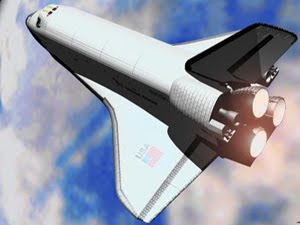
After safely reaching its launch pad at NASA's Kennedy Space Center in Florida, space shuttle Discovery awaits the next major milestone for its upcoming and final mission to the International Space Station, STS-133. Reporters are invited to cover a launch dress rehearsal, known as the Terminal Countdown Demonstration Test (TCDT), scheduled at Kennedy from Oct. 12 to 15. Six astronauts are set to launch aboard Discovery on Nov. 1 for the final scheduled flight before the orbiter is retired. To attend TCDT, international journalists must apply by 5 p.m. EDT on Oct. 1 to allow time for processing. U.S. media representatives must apply by Oct. 7.
Discovery arrived at the pad early Tuesday morning on top of a giant crawler-transporter. The crawler-transporter left Kennedy's Vehicle Assembly Building at about 7:23 p.m. Monday and travelled less than 1 mph during the 3.4-mile journey. The shuttle was secured on the launch pad at 1:49 a.m. Tuesday. The TCDT will provide Discovery’s astronauts and ground crews with an opportunity to participate in various simulated countdown activities, including equipment familiarization and emergency training.
To attend crew arrival, reporters must pick up badges between 6 a.m. and 3 p.m. Tuesday, Oct. 12, at the Kennedy Space Center Badging Office on State Road 405. For information about covering these events, including proper attire and meeting locations, credentialed media should visit: http://www.nasa.gov/centers/kennedy/news/media.html The 11-day mission will be the 35th flight to the station and the 39th flight for Discovery. The mission will deliver and install the Permanent Multipurpose Module, the Express Logistics Carrier 4, an external platform that holds large equipment, and critical spare components for the space station. Discovery also will deliver Robonaut 2, or R2, to become a permanent resident of the station as the first human-like robot in space.

NASA hosted government representatives from several Latin American countries in Washington on Thursday to share information about the agency's work in that region and discuss potential future partnerships. The event highlighted potential opportunities for cooperation with NASA in Earth science, space and International Space Station research, applications and education initiatives. The participants discussed some of NASA's ongoing work in Latin America, including the NASA and U.S. Agency for International Development’s (USAID) Regional Visualization and Monitoring System. The satellite system provides information from Earth observations to help local decision makers respond to natural disasters, and environmental threats, such as air pollution and fires.
"Our future in space is of global interest," said Michael O'Brien, NASA's associate administrator for International and Interagency Relations. "NASA has a long history of cooperation in Latin America, and our agency stands ready to continue that cooperation with interested partners in the region. This symposium was an excellent opportunity to continue our dialogue on areas of mutual interest with an eye toward future cooperation." Symposium attendees also discussed how to access data from NASA's many space-based resources and how to pursue new partnerships with agency-sponsored researchers. NASA has more than 30 agreements with 20 Latin American countries covering Earth and space science, research on the space station, new uses for groundbreaking technology and education.

NASA has awarded a five-year, $1.24 billion contract extension to The Boeing Co. to continue engineering support of the International Space Station through Sept. 30, 2015. Work under the contract extension is intended to maintain the station at peak performance levels so the full value of the unique research laboratory is available to NASA, its international partners, other U.S. government agencies and private companies. NASA officially accepted the space station from Boeing at the conclusion of a March 2010 Acceptance Review Board that verified the delivery, assembly, integration and activation of all hardware and software required by the contract. The acceptance signified the transition from assembly of the station to utilization.
This action extends the space station’s Vehicle Sustaining Engineering Contract, which was originally awarded in January 1995 and most recently extended in 2008. The extension brings the total contract value through the end of fiscal year 2015 to $16.2 billion. Work under the contract extension will include sustaining engineering of station hardware and software, and support of U.S. hardware and software provided to international partners and participants in the station program. The extension also includes end-to-end subsystem management for the majority of station systems, including materials and processes, electrical, electronic, and electromechanical parts, environments and electromagnetic effects.
NASA and its international partner agencies are in the final stages of analyzing the ability to sustain station operations through 2020 and awaiting formal confirmation of this goal by the governments of participating countries. This contract extension also includes assessment of the feasibility of extending the life of the primary structural hardware that was installed in orbit through the end of 2028. The work will be performed at NASA's Johnson Space Center in Houston, Kennedy Space Center in Florida, Marshall Space Flight Center in Huntsville, Ala., and at other domestic and international locations.

NASA announced the four astronauts who will make up the crew of STS-335, the rescue mission that would fly only if needed to bring home the members of space shuttle Endeavour's STS-134 mission, currently the final scheduled shuttle flight. Chris Ferguson, a retired U.S. Navy captain and veteran of two previous shuttle missions, would command the flight. Astronaut and U.S. Marine Col. Doug Hurley would serve as pilot, and astronauts Sandy Magnus and retired U.S. Air Force Col. Rex Walheim would be the mission specialists. Based on recommendations made after the loss of space shuttle Columbia in February 2003, NASA has trained a launch on need crew to be ready to fly in the event of irreparable damage to a shuttle while in orbit. Typically, the next crew to fly serves as the rescue crew for the current mission.
The STS-335 crew will prepare for a potential rescue mission and preserve flexibility if another shuttle flight is added to the launch manifest. “These astronauts will begin training immediately as a rescue crew as well as in the baseline requirements that would be needed to fly an additional shuttle flight," said Bill Gerstenmaier, associate administrator for NASA's Space Operations Mission Directorate in Washington. "The normal training template for a shuttle crew is about one year prior to launch, so we need to begin training now in order to maintain the flexibility of flying a rescue mission if needed, or alter course and fly an additional shuttle mission if that decision is made." If required, the STS-335 rescue mission would launch on shuttle Atlantis in June 2011 to bring home the STS-134 crew from the International Space Station.
STS-134 currently is scheduled to lift off on Feb. 26, 2011, from NASA's Kennedy Space Center in Florida. If converted to an additional shuttle flight, STS-335 would be redesignated STS-135 and targeted to launch in June 2011. Ferguson, who was born in Philadelphia, flew on two prior shuttle missions, STS-115 in 2006 and STS-126 in 2008. Hurley, who was born in Endicott, N.Y., but considers Apalachin, N.Y., his hometown, served as the pilot on STS-127 in 2009. Magnus, of Belleville, Ill., flew on STS-112 in 2002 and launched to the space station in 2008 on STS-126, where she served four and a half months as a flight engineer and science officer on Expedition 18 before returning to Earth on STS-119 in 2009. Walheim was born in Redwood City, Calif., and considers San Carlos, Calif., his hometown. He flew on STS-110 in 2002 and STS-122 in 2008.

NASA is offering live satellite interviews on Thursday, Sept. 16, from inside the next component of the International Space Station. The Permanent Multipurpose Module, or PMM, will launch in November aboard space shuttle Discovery. Scott Higginbotham, payloads manager for Discovery’s STS-133 mission, will conduct the interviews from the Space Station Processing Facility at NASA's Kennedy Space Center in Florida. To maintain a pristine environment inside the PMM, Higginbotham will be dressed in protective blue clothing, known as a “bunny suit,” that prevents even the smallest dust particles from causing contamination. Interview slots are available from 6 - 9 a.m. EDT.
To schedule interviews, media should contact Alysia Lee at 321-861-3530 or alysia.k.lee@nasa.gov by noon on Wednesday, Sept. 15. The PMM will carry a variety of spare parts and supplies, as well as Robonaut 2, or R2, the first human-like robot in space. The PMM can support experiments in fluid physics, materials science, biology, biotechnology and other microgravity experiments. A prepackaged video of Higginbotham providing a tour of the PMM and video b-roll of the PMM's interior will air on NASA TV Sept. 16 from 5:30 - 6 a.m., and between interviews when possible. Higginbotham has worked for NASA since 1987, beginning his career in the Space Shuttle Program as a mechanical systems engineer for the external fuel tank.
He currently is a mission manager in the International Space Station and Spacecraft Processing Directorate responsible for leading teams of engineers and technicians that assemble and test experiments, satellites, and station components to fly aboard the shuttle. The NASA Television Live Interview Media Outlet channel will be used for the interviews. The channel is a digital satellite C-band downlink by uplink provider Americom. It is on satellite AMC 3, transponder 9C, located at 87 degrees west, downlink frequency 3865.5 Mhz based on a standard C-band, horizontal downlink polarity. FEC is 3/4, data rate is 6.0 Mbps, symbol rate is 4.3404 Msps, transmission DVB-S, 4:2:0.

The return to Earth of three International Space Station crew members and the prelaunch activities, launch and docking of the station’s newest trio of residents will be broadcast on NASA Television during the next several weeks. After almost six months aboard the orbital laboratory, Expedition 24 Soyuz Commander Alexander Skvortsov, NASA Flight Engineer Tracy Caldwell Dyson and Russian Flight Engineer Mikhail Kornienko are scheduled to land their Soyuz TMA-18 spacecraft in southern Kazakhstan on Sept. 23 (Sept. 24 in Kazakhstan). Russian cosmonaut and Soyuz Commander Alexander Kaleri, NASA Flight Engineer Scott Kelly and Russian Flight Engineer Oleg Skripochka will launch aboard the Soyuz TMA-01M on Oct. 7 (Oct. 8 in Kazakhstan) from the Baikonur Cosmodrome in Kazakhstan.
They will join NASA astronaut and Expedition 25 Commander Doug Wheelock, NASA Flight Engineer Shannon Walker and Russian cosmonaut Fyodor Yurchikhin, who have been aboard the station since June 18. The coverage begins with a NASA TV Video File feed at 11 a.m. CDT Sept. 17. The footage will include the prelaunch news conference with Kelly, Kaleri and Skripochka at the Gagarin Cosmonaut Training Center in Star City, Russia, and their ceremonial visit to lay flowers at the Kremlin Wall in Red Square in Moscow. A change of command ceremony in which Skvortsov will hand over command of the station to Wheelock will be conducted at 4:05 p.m. Sept. 22. It will be replayed during NASA TV’s International Space Station Update at 10 a.m. Sept. 23 and during landing coverage that evening.

Journalists are invited to cover space shuttle Discovery’s last move from the Vehicle Assembly Building (VAB) to Launch Pad 39A on Sept. 20 at NASA’s Kennedy Space Center in Florida. Six astronauts are set to launch aboard the shuttle on Nov. 1. The STS-133 mission to the International Space Station is the final scheduled flight for Discovery before it is retired. Live coverage of Discovery's rollout will air on NASA Television beginning at 8 p.m. EDT. NASA TV’s Video File will broadcast highlights of the move. Discovery's first motion out of the VAB to the pad is scheduled for 8 p.m. The shuttle's 3.4- mile journey atop a giant crawler-transporter is expected to take approximately six hours. Activities include an 8 p.m. photo opportunity of the move followed by an interview availability at 8:30 p.m. with Discovery Flow Director Stephanie Stilson. Media must arrive at Kennedy's news center by 7:30 p.m. for the rollout photo opportunity.
There also will be a sunrise photo opportunity at the launch pad on Sept. 21, following Discovery’s arrival. Reporters need to be at the news center for transportation to the viewing area by 6 a.m. Updates for events are available at 321-867-2525. To attend rollout and the sunrise pad photo opportunity, international journalists must apply by 5 p.m. Sept. 13 to allow time for processing their requests. U.S. media representatives must apply by Sept. 17. Badges for rollout may be picked up starting at 6 a.m., Sept. 20, at the Kennedy Space Center Badging Office on State Road 405. The 11-day mission will be the 35th flight to the station and the 39th flight for Discovery. The mission will deliver and install the Permanent Multipurpose Module, the Express Logistics Carrier 4 - an external platform that holds large equipment - and critical spare components for the space station. Discovery also will deliver Robonaut 2, or R2, to become a permanent resident of the station as the first human-like robot in space.

NASA is enabling biomedical research with National Institutes of Health (NIH) grants that take advantage of the unique microgravity environment aboard the International Space Station to explore fundamental questions about important health issues. The NIH Biomedical Research on the International Space Station (BioMed-ISS) awards are the next step in a new partnership to apply the national laboratory to research that complements NASA's own space studies. The NIH studies include research on how bones and the immune system weaken in space. "This marks the beginning of a new era in microgravity-based research with the International Space Station turning the corner from construction to use as a new national laboratory," said Mark Uhran, assistant associate administrator for space station, NASA Headquarters in Washington.
In 2005 Congress recognized the immense promise the station holds for U.S.-led science and technology efforts. It opened the U.S. portion of the facility to federal agencies, university and private sector researchers by designating the station as a national laboratory. In addition to NIH, NASA has similar research agreements with the Departments of Defense, Agriculture and Energy and the National Science Foundation. Scientists will conduct their experiments under a two-stage mechanism. The first is a ground-based preparatory phase to allow investigators to meet select milestones and technical requirements. The second is an experimental phase on the space station that will include preparing the experiments for launch, working with astronauts to conduct them on orbit and performing subsequent data analyses on Earth.
"BioMed-ISS offers a novel opportunity for gaining scientific insights that would not otherwise be possible through ground-based means," said Stephen I. Katz, M.D., Ph.D., director of the NIH's National Institute of Arthritis and Musculoskeletal and Skin Diseases and NIH liaison to NASA. "The beauty of this initiative is that it offers an unprecedented opportunity for benefitting human health on earth, while leveraging the American public's investment in the ISS." NIH is hosting three rounds of competition for the initiative. The first round of grants for the ground-based phase, totaling an estimated $1,323,000, has been awarded as follows: Paola Divieti, M.D., Ph.D., Massachusetts General Hospital/Harvard Medical School, Boston: Weight-bearing activities contribute to the development and maintenance of bone mass, while weightlessness and immobility, as experienced by the astronauts and bedridden and immobilized patients, can result in bone loss and a weakened skeleton.

NASA satellites and the International Space Station are keeping eyes on Hurricane Earl as it heads for New England. Watches and Warnings are posted in the U.S. northeast. Having felt the effects of both increasing wind shear and cooler waters, Hurricane Earl weakened to a Category 2 storm on the Saffir-Simpson scale with winds still powerful at 90 knots (104 mph) as it neared the North Carolina coast. It was at this time that the Tropical Rainfall Measuring Mission (TRMM) satellite captured the data about TRMM's rainfall rates. The rainfall pattern associated with Earl and was made using data from the TRMM satellite when it flew over the storm on September 3 at 08:22 UTC (4:22 a.m. EDT).
Rainbands from Earl were visible over the outer banks, eastern North Carolina, and southeastern Virginia, but the storm no longer has a well-defined eye. TRMM observed moderate rainfall mostly to the north of Earl's center. Meanwhile, from a second vantage point in space, at the International Space Station, Astronaut Douglas Wheelock caught an image of the eye of the storm on September 3. As the ISS flew over Hurricane Earl Wheelock noted that it looked like magnificent chaos from up there on the Space Station and called it incredibly breathtaking. At 11 a.m. EDT on Sept. 3, Hurricane Earl's maximum sustained winds were near 85 mph. It was located about 350 miles south-southwest of Nantucket, Mass. near 36.8 North and 73.1 West. Earl's minimum central pressure was 961 millibars, and he was moving north-northeast at 21 mph.
Because Earl is now forecast to track farther away from the coast, many of the watches and warnings have been discontinued, but new watches and warnings are in place. The current watches and warnings in effect include: a hurricane warning is in effect for Woods Hole eastward around Cape Cod to Sagamore Beach Massachusetts, including Marthas Vineyard and Nantucket Island. In addition a Hurricane Watch is now in effect for Nova Scotia, Canada from Ecum Secum westward to Digby. Earl is expected to weaken further as it continues northward over cooler waters along the Eastern Seaboard. Updates on Earl are available through the National Hurricane Center at www.nhc.noaa.govand through the NASA Hurricane twitter page.
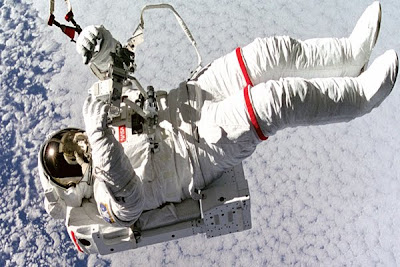
For the first time in nearly 50 years of American human spaceflight, Kennedy Space Center could be at the forefront of designing, developing, demonstrating and flying human-rated vehicles. "We're looking to create a robust commercial space program with multiple customers, multiple providers and multiple systems that take Americans to the International Space Station and other low Earth orbit destinations," said Ed Mango, director of the Space Transportation Planning Office. In May, the office sent out a Commercial Crew Initiative Request for Information (RFI). Mango, along with the office's Exploration Systems Mission Directorate (ESMD) Planning Lead Phil McAlister, Deputy Program Planning Manager Brent Jett and Insight Manager Scott Thurston, recently participated in a forum at NASA Headquarters to talk about common themes captured from dozens of industry responses.
ESMD Deputy Administrator Dr. Laurie Leshin, Commercial Orbital Transportation Services (COTS) Program Manager Alan Lindenmoyer and the Space Transportation Office's Deputy Director Maria Collura also were on hand to offer insight. "We have about 50 team members from shuttle, space station, Constellation, the Launch Services Program, the astronaut office, other NASA centers and contractors all coming together and melding our ideas of what commercial crew should be," Mango said. "And we're melding. it's like making gumbo and we just started making the roux." If the Commercial Crew Program is approved by Congress and the White House, it would have several billion dollars within a five- year period to develop humanrating requirements, partner with commercial entities and complete design and development. The program also would include demonstration flights.
"We believe that we could fund up to four providers with that $5.8 billion," McAlister said. "We definitely want competition. That is a key aspect to our strategy. We need multiple providers that are coming forward with innovative solutions." In addition to competition, will be collaboration. Thurston described more in depth about how NASA will take on a more "insight" role than its traditional "oversight" role and it's a change that the team doesn't take lightly. "NASA has to re-examine what has been our traditional identity," said Leshin, "and think about our role in a new way as catalysts of a much broader and more inclusive activity." Another aspect of collaboration would come from industries that are interested in performing science and research in low Earth orbit, whether on board the International Space Station or other future orbiting complexes.
 The next crew to live and work on the International Space Station will participate in a news conference at 1 p.m. CDT on Wednesday, Sept. 15, at NASA's Johnson Space Center in Houston. The news conference will air live on NASA Television and the agency's website. The crew also will answer questions from reporters at participating NASA centers and from those in Europe. NASA astronaut Cady Coleman and her crewmates Dmitry Kondratiev, of the Russian Space Agency, and Paolo Nespoli, of the European Space Agency, will participate in individual round-robin interviews, in person or by phone, following the news conference. The crew also will participate in a photo opportunity for reporters at Johnson.
U.S. and foreign media representatives planning to attend the briefing must contact the Johnson newsroom at 281-483-5111 by 4 p.m. on Tuesday, Sept. 7. To participate in the round-robin interviews, reporters should contact the Johnson newsroom by 4 p.m. on Tuesday, Sept. 13. Coleman, Kondratiev and Nespoli will constitute three of the six crewmembers for both Expedition 26 and 27. They will launch aboard a Russian Soyuz spacecraft from the Baikonur Cosmodrome in Kazakhstan in mid-December. They will join NASA's Scott Kelly, who will command the station, and Flight Engineers Alexander Kaleri and Oleg Skripochka. Kelly, Kaleri and Skripochka will launch in a separate Soyuz on Oct. 7 and arrive at the orbiting laboratory Oct. 9.
The next crew to live and work on the International Space Station will participate in a news conference at 1 p.m. CDT on Wednesday, Sept. 15, at NASA's Johnson Space Center in Houston. The news conference will air live on NASA Television and the agency's website. The crew also will answer questions from reporters at participating NASA centers and from those in Europe. NASA astronaut Cady Coleman and her crewmates Dmitry Kondratiev, of the Russian Space Agency, and Paolo Nespoli, of the European Space Agency, will participate in individual round-robin interviews, in person or by phone, following the news conference. The crew also will participate in a photo opportunity for reporters at Johnson.
U.S. and foreign media representatives planning to attend the briefing must contact the Johnson newsroom at 281-483-5111 by 4 p.m. on Tuesday, Sept. 7. To participate in the round-robin interviews, reporters should contact the Johnson newsroom by 4 p.m. on Tuesday, Sept. 13. Coleman, Kondratiev and Nespoli will constitute three of the six crewmembers for both Expedition 26 and 27. They will launch aboard a Russian Soyuz spacecraft from the Baikonur Cosmodrome in Kazakhstan in mid-December. They will join NASA's Scott Kelly, who will command the station, and Flight Engineers Alexander Kaleri and Oleg Skripochka. Kelly, Kaleri and Skripochka will launch in a separate Soyuz on Oct. 7 and arrive at the orbiting laboratory Oct. 9.
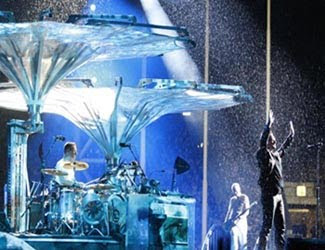 NASA and U2 released a commemorative video highlighting a year's worth of collaboration in space and on the Irish rock band's 360 Degree tour. U2 approached NASA in 2009 with an idea to include a dialogue between the band and the crew of the International Space Station during U2's world tour. The astronauts of Expedition 20, the crew then living aboard the space station, agreed to participate and spoke with U2 several times before recording a video segment the band incorporated into its concerts. The space station crew members were Michael Barratt of NASA, Frank De Winne of the European Space Agency, Bob Thirsk of the Canadian Space Agency, Koichi Wakata of the Japan Aerospace Exploration Agency, and Gennady Padalka and Roman Romanenko of the Russian Federal Space Agency.
"Working with U2 is atypical for NASA," said Bill Gerstenmaier, NASA's associate administrator for Space Operations. "By combining their world tour with the space station's out-of-this-world mission, more people and different people than our normal target audiences learned about the International Space Station and the important work we are doing in orbit." Speaking onstage in Houston last year, Bono said, "These are the very best people in the world dedicated to figuring how our little planet exists in this cosmos we call home." De Winne, and Romanenko attended U2's performance in Moscow on Wednesday and met with the band before the show.U2.com created the video and presented it to NASA to document the collaboration between the band and the space agency.
NASA and U2 released a commemorative video highlighting a year's worth of collaboration in space and on the Irish rock band's 360 Degree tour. U2 approached NASA in 2009 with an idea to include a dialogue between the band and the crew of the International Space Station during U2's world tour. The astronauts of Expedition 20, the crew then living aboard the space station, agreed to participate and spoke with U2 several times before recording a video segment the band incorporated into its concerts. The space station crew members were Michael Barratt of NASA, Frank De Winne of the European Space Agency, Bob Thirsk of the Canadian Space Agency, Koichi Wakata of the Japan Aerospace Exploration Agency, and Gennady Padalka and Roman Romanenko of the Russian Federal Space Agency.
"Working with U2 is atypical for NASA," said Bill Gerstenmaier, NASA's associate administrator for Space Operations. "By combining their world tour with the space station's out-of-this-world mission, more people and different people than our normal target audiences learned about the International Space Station and the important work we are doing in orbit." Speaking onstage in Houston last year, Bono said, "These are the very best people in the world dedicated to figuring how our little planet exists in this cosmos we call home." De Winne, and Romanenko attended U2's performance in Moscow on Wednesday and met with the band before the show.U2.com created the video and presented it to NASA to document the collaboration between the band and the space agency.
View this site : Property auctions

NASA is challenging high school teams to design software to program small satellites aboard the International Space Station. The competition centers on the Synchronized Position Hold, Engage, Reorient, Experimental Satellites, or SPHERES. SPHERES are bowling ball-sized spherical satellites used to test maneuvers for spacecraft performing autonomous rendezvous and docking. Three of these satellites fly inside the station's cabin. Each is self-contained with power, propulsion, computing and navigation equipment. The Zero-Robotics investigation, run by the Massachusetts Institute of Technology in Cambridge, Mass., is designed to inspire future scientists and engineers.
The teams are asked to address challenges of satellite docking, assembly and flight formation. The 2010 Zero-Robotics Challenge expands on a limited pilot program performed in fall 2009. This expanded pilot, called HelioSPHERES, will involve high schools from across the country during the 2010 - 2011 academic year. This new education program builds critical engineering skills for students, such as problem solving, design thought process, operations training, teamwork and presentation skills. The first 100 high school teams to register by Sept. 10 will be selected for the competition. Their full proposals are due by Sept. 14. Twenty teams selected from the 100 candidates will compete using simulations and ground-based testing at MIT.
The software of the top 10 winners will be sent to the station, and an astronaut aboard the orbiting laboratory will program the SPHERES satellites to run the students' tests. MIT's Space Systems Laboratory developed the SPHERES program to provide the Defense Advanced Research Projects Agency, NASA and other researchers with a long-term test bed for validating technologies critical to the operation of future satellites, docking missions and satellite autonomous maneuvers. SPHERES have been used by many organizations, including other government agencies and graduate student research groups, since the program began in 2006. The satellites provide opportunities to test a wide range of hardware and software at an affordable cost.
View this site : Property auctions


