
Software developed at NASA's Ames Research Center at Moffett Field, Calif., is enabling major fuel savings for airlines and an increase in environmental efficiency. The Ames Direct-To software is a product of NASA aeronautics research in air traffic management. The software has been adopted by The Boeing Company for commercial use. Boeing intends to offer airlines the opportunity to subscribe next year to a new air traffic efficiency service that uses the software. "We're delighted that Boeing is using NASA technology for environmental benefit," said Ames Center Director Pete Worden. Direct-To enables airlines to save fuel and reduce emissions by automatically identifying flight route shortcuts that are wind-favorable and acceptable to air traffic controllers. NASA demonstrated Direct-To's potential to reduce fuel consumption in the airspace around Dallas-Fort Worth in 2001.
"We estimated a potential combined savings of about 900 flying minutes per day for all aircraft in the demonstration airspace," said David McNally, the project principal investigator at Ames. Boeing incorporated the technology into its subscription-based Direct Routes. It is part of the company's InFlight Optimization Services that help airlines save fuel and increase environmental efficiency. Direct Routes automatically alerts an airline's operations center and flight crew when a simple, more fuel-efficient path opens up along an airplane's intended route. The software potentially could save tens of thousands of flight minutes per year for a medium-sized U.S. operator.

NASA has announced the successful activation of new hardware that will support water production services aboard the International Space Station. The Sabatier system can create up to 530 gallons of water per year from byproducts of the station's Oxygen Generation System and Carbon Dioxide Removal Assembly. The process is named for Paul Sabatier, a 1912 Nobel Prize winner in chemistry. "This is an important step forward in NASA's commercialization endeavors and shows how successful private industry can be at providing solutions on its own," said Bill Gerstenmaier, NASA associate administrator for Space Operations at the agency's Headquarters in Washington. "The ability to produce this water will be important for sustaining space station operations once the shuttle is retired."
The system was integrated into the space station's Water Recovery System during the week of Oct. 11. Activation, checkout and first use of the system were completed Oct. 22, running for over eight hours. The Sabatier process uses a nickel catalyst to interact with hydrogen and carbon dioxide at elevated temperatures and pressures to produce water and methane. The water is retained for recycling processes, and the methane is vented outside of the space station. Prior to adding the Sabatier system, hydrogen produced while generating station oxygen was considered waste gas and vented overboard. Carbon dioxide generated by crew metabolism also was vented overboard. With the Sabatier system, these two former waste gases will generate a valuable product for the space station: water.
Under contract to NASA, Hamilton Sundstrand supplied the flight hardware and operational support for a Sabatier-reaction-based system that operates as part of the station's Environmental Control and Life Support System. This contract is unique because NASA did not participate in design reviews or impose any specifications on the design, except for those defined in the safety, interface and acceptance requirements met by Hamilton Sundstrand. The company developed, procured, and built the flight hardware and support equipment needed for operations and training. The in-orbit operational portion of the contract runs until Sept. 30, 2014.
 NASA Administrator Charles Bolden left for Beijing Oct. 15 amid mixed congressional response to Bolden's plans to meet with Chinese officials to discuss the possible for cooperation in human spaceflight. Two House Republicans and a Democrat representing the Congressional U.S. China Working Group write Bolden Oct. 12 to express their sustain for the five day trip and request the NASA chief raise the possibility of a "joint-rescue capability in space that would allow the U.S., China and Russia to save each other's space crews."
The letter, signed by Reps. Rick Larsen, Charles Boustany and Mark Kirk, said Bolden should think developing a common docking interface for space capsules capable of attainment the international space station, including the Chinese Shenzhou, Russian Soyuz and NASA's Orion crew capsule, which the agency is still planning to expand for use as a crew lifeboat on the orbiting outpost. "As NASA develops the new Crew Return Vehicle based on the work previously done on the Orion crew capsule, the U.S. should begin discussion on a ordinary docking ring between the CRV, Shenzhou and Soyuz," the letter states. Other lawmakers, however, are adamantly opposite to such cooperation and made sure Bolden was aware of their displeasure.
U.S. Reps. Frank Wolf of Virginia, John Culberson of Texas and Robert Aderholt of Alabama all Republicans portion on the House Appropriations commerce, justice, science subcommittee that approves NASA's annual budgets connected California Republican Rep. Dana Rohrabacher in objecting to Bolden's trip in a note sent to the NASA chief as he left town. "As you know, we have serious concerns about the nature and goals of China's space program and powerfully oppose any cooperation between NASA and China," the lawmakers wrote in the Oct. 15 letter to Bolden. "In light of the small notice and scant information provided before your departure to China, we respectfully request a full conference with you upon your return."
NASA Administrator Charles Bolden left for Beijing Oct. 15 amid mixed congressional response to Bolden's plans to meet with Chinese officials to discuss the possible for cooperation in human spaceflight. Two House Republicans and a Democrat representing the Congressional U.S. China Working Group write Bolden Oct. 12 to express their sustain for the five day trip and request the NASA chief raise the possibility of a "joint-rescue capability in space that would allow the U.S., China and Russia to save each other's space crews."
The letter, signed by Reps. Rick Larsen, Charles Boustany and Mark Kirk, said Bolden should think developing a common docking interface for space capsules capable of attainment the international space station, including the Chinese Shenzhou, Russian Soyuz and NASA's Orion crew capsule, which the agency is still planning to expand for use as a crew lifeboat on the orbiting outpost. "As NASA develops the new Crew Return Vehicle based on the work previously done on the Orion crew capsule, the U.S. should begin discussion on a ordinary docking ring between the CRV, Shenzhou and Soyuz," the letter states. Other lawmakers, however, are adamantly opposite to such cooperation and made sure Bolden was aware of their displeasure.
U.S. Reps. Frank Wolf of Virginia, John Culberson of Texas and Robert Aderholt of Alabama all Republicans portion on the House Appropriations commerce, justice, science subcommittee that approves NASA's annual budgets connected California Republican Rep. Dana Rohrabacher in objecting to Bolden's trip in a note sent to the NASA chief as he left town. "As you know, we have serious concerns about the nature and goals of China's space program and powerfully oppose any cooperation between NASA and China," the lawmakers wrote in the Oct. 15 letter to Bolden. "In light of the small notice and scant information provided before your departure to China, we respectfully request a full conference with you upon your return."
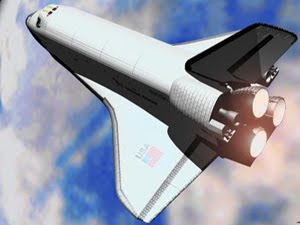
After safely reaching its launch pad at NASA's Kennedy Space Center in Florida, space shuttle Discovery awaits the next major milestone for its upcoming and final mission to the International Space Station, STS-133. Reporters are invited to cover a launch dress rehearsal, known as the Terminal Countdown Demonstration Test (TCDT), scheduled at Kennedy from Oct. 12 to 15. Six astronauts are set to launch aboard Discovery on Nov. 1 for the final scheduled flight before the orbiter is retired. To attend TCDT, international journalists must apply by 5 p.m. EDT on Oct. 1 to allow time for processing. U.S. media representatives must apply by Oct. 7.
Discovery arrived at the pad early Tuesday morning on top of a giant crawler-transporter. The crawler-transporter left Kennedy's Vehicle Assembly Building at about 7:23 p.m. Monday and travelled less than 1 mph during the 3.4-mile journey. The shuttle was secured on the launch pad at 1:49 a.m. Tuesday. The TCDT will provide Discovery’s astronauts and ground crews with an opportunity to participate in various simulated countdown activities, including equipment familiarization and emergency training.
To attend crew arrival, reporters must pick up badges between 6 a.m. and 3 p.m. Tuesday, Oct. 12, at the Kennedy Space Center Badging Office on State Road 405. For information about covering these events, including proper attire and meeting locations, credentialed media should visit: http://www.nasa.gov/centers/kennedy/news/media.html The 11-day mission will be the 35th flight to the station and the 39th flight for Discovery. The mission will deliver and install the Permanent Multipurpose Module, the Express Logistics Carrier 4, an external platform that holds large equipment, and critical spare components for the space station. Discovery also will deliver Robonaut 2, or R2, to become a permanent resident of the station as the first human-like robot in space.


