
Community college students in a pilot program will take the first steps toward potential technology careers as they develop robotic explorers at NASA field centers. Ninety students from community colleges in 23 states have been selected to travel to NASA's Johnson Space Flight in Houston or the Marshall Space Flight Center in Huntsville, Ala., for hands on experience with technology development and direct interaction with NASA experts. This week, the White House Summit on Community Colleges explored how these institutions can support a highly educated and skilled workforce. Concurrently, NASA is preparing for the culmination of the National Community College Aerospace Scholars pilot program.
The agency will bring young scholars to join agency professionals Oct. 20-22 to develop rovers to explore the surfaces of other worlds and learn more about actual careers in science and engineering. During the summer, students enrolled in the program completed four Web-based assignments that explored topics in engineering and technology. Those whose grades on the projects averaged at least 94 percent qualified to participate in the NASA field center experience, with the agency paying students' travel expenses. Students will apply what they have learned during the year to technology and design problems in consultation with NASA engineers.
"Community colleges are an important part of the academic landscape, and NASA is proud to be working with these students to continue their interest and skills in science, technology, engineering and mathematics," said NASA Administrator Charles Bolden. "This innovative project gets students engaged in actual engineering design and production from concept to build-out that simulates the processes NASA uses in designing robotic explorers for solar system destinations. By letting them experience first-hand the challenges and excitement inherent in space exploration, we may be cultivating NASA's workforce of tomorrow."
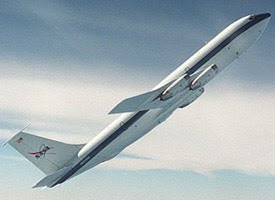
NASA recently sponsored a series of flights from Ellington Field in Houston to test technologies in reduced gravity conditions. The flights marked the third year of operations for NASA's Facilitated Access to the Space Environment for Technology program, called FAST. The 16 research teams that participated were comprised of small businesses, university groups and NASA researchers from Massachusetts, New York, Maryland, Florida, Ohio, Indiana, Texas and California. The teams were selected competitively based on the value of their technology to NASA and the potential to improve the technology through testing in the unique, reduced-gravity environment.
"University students from Florida to California, private companies and NASA centers all participated in this latest round of technology test flights," said NASA Chief Technologist Bobby Braun at NASA Headquarters in Washington. "This commercially-provided test platform allows small technology innovators a unique way to test systems before they reach the harsh and unforgiving environment of space, providing a proving ground at the high frontier." The FAST program is designed to help reduce the risk of using new technologies during space missions. The flights also provide insight into why some technologies may fail before deploying them on a costly ride into the unforgiving environment of space.
The flights were on a Boeing 727 airplane operated under contract to NASA by the Zero Gravity Corporation in Vienna, Va. They simulated the weightless environment of space and the reduced-gravity conditions of the moon. The FAST program paid for the flight time and operations while each research team secured separate funding for their technology development. The aircraft provides a series of short periods of reduced gravity lasting about 25 seconds. By repeating the maneuver, researchers obtain approximately 15 minutes of cumulative test time during each flight. Two flights with lunar gravity conditions and two flights with zero gravity conditions were conducted with approximately 10 projects and 25 to 30 researchers on each flight.

Astronomers using NASA's Rossi X-ray Timing Explorer (RXTE) have found the first fast X-ray pulsar to be eclipsed by its companion star. Further studies of this unique stellar system will shed light on some of the most compressed matter in the universe and test a key prediction of Einstein's relativity theory. The pulsar is a rapidly spinning neutron star the crushed core of a massive star that long ago exploded as a supernova. Neutron stars pack more than the sun's mass into a ball nearly 60,000 times smaller. With estimated sizes between 10 and 15 miles across, a neutron star would just span Manhattan or the District of Columbia.
"It's difficult to establish precise masses for neutron stars, especially toward the higher end of the mass range theory predicts," said Craig Markwardt at NASA's Goddard Space Flight Center in Greenbelt. "As a result, we don't know their internal structure or sizes as well as we'd like. This system takes us a step closer to narrowing that down." Known as Swift J1749.4-2807 J1749 for short the system erupted with an X-ray outburst on April 10. During the event, RXTE observed three eclipses, detected X-ray pulses that identified the neutron star as a pulsar, and even recorded pulse variations that indicated the neutron star's orbital motion.
J1749 was discovered in June 2006, when a smaller eruption brought it to the attention of NASA's Swift satellite. Observations by Swift, RXTE and other spacecraft revealed that the source was a binary system located 22,000 light-years away in the constellation Sagittarius and that the neutron star was actively capturing, or accreting, gas from its stellar partner. This gas gathers into a disk around the neutron star. "Like many accreting binary systems, J1749 undergoes outbursts when instabilities in the accretion disk allow some of the gas to crash onto the neutron star," said Tod Strohmayer, RXTE's project scientist at Goddard.
 Looking for a little excitement as the summer draws to a close? This year's Perseid meteor shower peaks on Aug. 12-13, and it promises to be one of the best displays of the year. If forecasters are correct, the shower should produce a peak display of at least 80 meteors per hours. A waxing crescent moon will set before the shower becomes active, setting a perfect stage for meteor watching weather permitting, of course! On Thursday, Aug. 12, from 3-4 p.m. EDT, astronomer Bill Cooke from NASA's Marshall Space Flight Center will answer your questions about the Perseids and the best ways to view it. Joining the chat is easy. Simply log in to this page on Aug. 12 a few minutes before 3 p.m. EDT.
A chat window will be active at the bottom of the page. Log in, then Bill will start answering your questions at 3:00. The Perseids have been observed for at least 2,000 years and are associated with the comet Swift-Tuttle. Each year in August, the Earth passes through a cloud of the comet's debris. These bits of ice and dust most over 1,000 years old burn up in the Earth's atmosphere to create one of the best meteor showers of the year. The Perseids can be seen all over the sky, but the best viewing opportunities will be across the northern hemisphere. Those with sharp eyes will see that the meteors radiate from the direction of the constellation Perseus.
The head of NASA's Meteoroid Environment Office, Dr. Bill Cooke specializes in the meteoroid environment and its effects on space vehicles of all sorts. While a graduate student at the University of Florida, he worked on instruments flying onboard balloons, the Space Shuttle, Giotto, and the Long Duration Exposure Facility. After obtaining his PhD, he came to work at Marshall Space Flight Center as a member of the Space Environments Team. When not occupied with meteor observations and shower forecasts, he dabbles as a free- lance author for magazines and is a mentor for the Team America Rocketry Challenge and NASA's Student Launch Initiative rocketry programs.

A camera aboard NASA's Mars Odyssey spacecraft has helped develop the most accurate global Martian map ever. Researchers and the public can access the map via several websites and explore and survey the entire surface of the Red Planet. The map was constructed using nearly 21,000 images from the Thermal Emission Imaging System, or THEMIS, a multi-band infrared camera on Odyssey. Researchers at Arizona State University's Mars Space Flight Facility in Tempe, in collaboration with NASA's Jet Propulsion Laboratory in Pasadena, Calif., have been compiling the map since THEMIS observations began eight years ago.
The pictures have been smoothed, matched, blended and cartographically controlled to make a giant mosaic. Users can pan around images and zoom into them. At full zoom, the smallest surface details are 100 meters (330 feet) wide. While portions of Mars have been mapped at higher resolution, this map provides the most accurate view so far of the entire planet. "We've tied the images to the cartographic control grid provided by the U.S. Geological Survey, which also modeled the THEMIS camera's optics," said Philip Christensen, principal investigator for THEMIS and director of the Mars Space Flight Facility.
"This approach lets us remove all instrument distortion, so features on the ground are correctly located to within a few pixels and provide the best global map of Mars to date." Working with THEMIS images from the new map, the public can contribute to Mars exploration by aligning the images to within a pixel's accuracy at NASA's "Be a Martian" website, which was developed in cooperation with Microsoft Corp.

Complex interactions between Saturn and its satellites have led scientists using NASA's Cassini spacecraft to a comprehensive model that could explain how oxygen may end up on the surface of Saturn's icy moon Titan. The presence of these oxygen atoms could potentially provide the basis for pre-biological chemistry.
The interactions are captured in two papers, one led by John Cooper and another led by Edward Sittler, published in the journal Planetary and Space Science in late 2009. Cooper and Sittler are Cassini plasma spectrometer team scientists at NASA's Goddard Space Flight Center in Greenbelt, Md. "Titan and Enceladus, another icy moon of Saturn, are chemically connected by the flow of material through the Saturn system," Cooper said.
In one paper, Cooper and colleagues provide an explanation for forces that could generate the Enceladus geysers that spew water vapor into space. In the other, published in the same issue, Sittler and colleagues describe a unique new process in which oxygen that circulates in the upper atmosphere of Titan can be carried all the way to the surface without further chemical contamination by being encased in carbon cages called fullerenes.
 NASA stands to lose $100 million under an amended budget ask for U.S. President Barack Obama sent to Congress June 18. The money, a small part of the roughly $19 billion NASA could get under the 2011 budget request Obama sent to Congress in February, would instead go to the Departments of Commerce and Labor for initiatives expected at helping Florida and other states bracing for job losses connected with the end of the space shuttle program.
"This request would fund an initiative to develop a plan to encourage regional economic growth and job creation along the Florida Space Coast and other affected regions in furtherance of my Administration's bold new route for human space flight, which revitalizes NASA and transitions to new opportunities in the space industry and outside," Obama wrote House Speaker Nancy Pelosi in a June 18 letter detail a number of changes to his 2011 budget request. A copy of the letter was obtain by Space News.
In April, Obama pledged $40 million to NASA's mainly Florida-based space shuttle work force transition to new jobs. He selected a task force led by NASA Administrator Charles Bolden and Commerce Secretary Gary Locke to choose how best to spend the money. Bolden told Congress in April that the $40 million would come from $1.9 billion NASA was request in 2011 to cover costs linked with terminating agency's Moon-focused Constellation program, a 5-year-old effort to replaces the space shuttle with new rockets and spacecraft optimized for lunar missions.
 NASA has awarded the software engineering support contract at the agency's Goddard Space Flight Center in Greenbelt, Md., to Columbus Technologies and Services, Inc. of Pasadena, Calif.The 8A set-aside cost-plus-award-fee, indefinite delivery/indefinite quantity contract has a minimum value of $5 million and a maximum value of $250 million. The period of performance is five years, which will begin after a 45-day phase-in period.
The contractor will acquire on and off-site support for the core business of the Software Engineering Division (SED) at Goddard. The work will include, but is not limited to, the design, development, test, and deployment of software; data and information systems for aerospace missions within the Applied Engineering and Technology Directorate. The work also includes support for the SED managed development and test labs, test facilities and technical operations. The work will be performed at Goddard and at the contractor's facility in Greenbelt.
NASA has awarded the software engineering support contract at the agency's Goddard Space Flight Center in Greenbelt, Md., to Columbus Technologies and Services, Inc. of Pasadena, Calif.The 8A set-aside cost-plus-award-fee, indefinite delivery/indefinite quantity contract has a minimum value of $5 million and a maximum value of $250 million. The period of performance is five years, which will begin after a 45-day phase-in period.
The contractor will acquire on and off-site support for the core business of the Software Engineering Division (SED) at Goddard. The work will include, but is not limited to, the design, development, test, and deployment of software; data and information systems for aerospace missions within the Applied Engineering and Technology Directorate. The work also includes support for the SED managed development and test labs, test facilities and technical operations. The work will be performed at Goddard and at the contractor's facility in Greenbelt.


