 NASA Administrator Charles Bolden announced Tuesday the selection of Leland D. Melvin as the agency's new associate administrator for education, effective immediately. He succeeds James L. Stofan, who had served in an acting capacity since the spring. Since April 2010, Melvin has been assigned to the Office of Education at Headquarters leading the Education Design Team. His job was to develop a strategy to improve NASA's education offerings and to assist the agency in establishing goals, structures, processes and evaluation techniques to implement a sustainable and innovative science, technology, engineering and math (STEM) education program. He also served as the partnership development manager for the agency's new Summer of Innovation education initiative, aimed at engaging middle school students in STEM activities during the summer break.
"I am delighted to have Leland lead the Office of Education at a time when engaging more students in STEM-related studies and careers is so critical not only to NASA but to our nation," Bolden said. "With his dedication and passion, I know we will have a bright future in education under his leadership." "I also want to thank Jim Stofan for the outstanding job he has done leading the Office of Education since April," Bolden added. "He launched several key new education programs during his tenure and will continue to be a valued asset as he resumes his previous role as deputy associate administrator."
As associate administrator, Melvin will be responsible for the development and implementation of the agency's education programs that strengthen student involvement and public awareness about NASA's scientific goals and missions. "My passion for education was inspired by my parents, who were both middle school teachers," Melvin said. "I witnessed the direct impact that educators can have in a community and on an individual's destiny. NASA's people, programs and resources are unparalleled. Our unique assets are poised to engage students, to captivate their imagination and to encourage their pursuit of STEM-related studies that are so vital to their future. This is an exciting challenge and I am ready to work with Administrator Bolden, my colleagues at NASA, our partners, and students across the country to usher in a new era of opportunity to inspire that next generation of explorers."
NASA Administrator Charles Bolden announced Tuesday the selection of Leland D. Melvin as the agency's new associate administrator for education, effective immediately. He succeeds James L. Stofan, who had served in an acting capacity since the spring. Since April 2010, Melvin has been assigned to the Office of Education at Headquarters leading the Education Design Team. His job was to develop a strategy to improve NASA's education offerings and to assist the agency in establishing goals, structures, processes and evaluation techniques to implement a sustainable and innovative science, technology, engineering and math (STEM) education program. He also served as the partnership development manager for the agency's new Summer of Innovation education initiative, aimed at engaging middle school students in STEM activities during the summer break.
"I am delighted to have Leland lead the Office of Education at a time when engaging more students in STEM-related studies and careers is so critical not only to NASA but to our nation," Bolden said. "With his dedication and passion, I know we will have a bright future in education under his leadership." "I also want to thank Jim Stofan for the outstanding job he has done leading the Office of Education since April," Bolden added. "He launched several key new education programs during his tenure and will continue to be a valued asset as he resumes his previous role as deputy associate administrator."
As associate administrator, Melvin will be responsible for the development and implementation of the agency's education programs that strengthen student involvement and public awareness about NASA's scientific goals and missions. "My passion for education was inspired by my parents, who were both middle school teachers," Melvin said. "I witnessed the direct impact that educators can have in a community and on an individual's destiny. NASA's people, programs and resources are unparalleled. Our unique assets are poised to engage students, to captivate their imagination and to encourage their pursuit of STEM-related studies that are so vital to their future. This is an exciting challenge and I am ready to work with Administrator Bolden, my colleagues at NASA, our partners, and students across the country to usher in a new era of opportunity to inspire that next generation of explorers."

NASA and Univision Communications Inc. are teaming up to launch an on-air and online initiative to help engage Hispanic students in science, technology, engineering and mathematics (STEM) education. NASA is committed to preparing the next generation of scientists, engineers and technologists. Univision, a leading Spanish-language media company with television, radio, online and interactive assets focused on improving graduation rates and preparing Hispanic students for college.
Beginning Saturday, Oct. 2, Univision will air a series of Spanish-language educational video segments produced by NASA and titled "NASA and You" (NASA y Tu). Featuring Hispanic employees from NASA as role models, the 30-second videos will present new perspectives on education and STEM careers. Among many featured NASA staff members are astronaut Jose Hernandez, who talks about his life and how he became an astronaut, and Margaret Dominguez, an optics engineer, who talks about the engineering challenges of putting a mirror as large as a tennis court in small spacecraft.
"NASA's challenging missions offer a unique opportunity to inspire excellence in students of every age," said NASA Deputy Administrator Lori Garver. "This collaboration will combine NASA's unique STEM educational content with Univision's communications platforms to reach Hispanic youth and encourage them to pursue STEM-related careers." The segments will air on Saturday mornings on the Univision children's block "Planeta U." They are part of the company's comprehensive, multi-platform, three-year national education initiative called Es El Momento.

NASA has awarded grants to nine academic institutions and their partners that serve large numbers of minority and underrepresented students to strengthen offerings in science, technology, engineering, and math, or STEM. The grants total approximately $1.15 million through the agency's Curriculum Improvement Partnership Award for the Integration of Research (CIPAIR) project. Seven institutions and their partners will receive one-year funding ranging from approximately $145,000 to $150,000 per year for up to three years, based on performance and availability of funds. Two organizations will receive planning grants. The grants must be used to increase the quantity and quality of STEM curricula.
Selections were based on proposal reviews by scientists and educators from private industry, academia, the National Science Foundation and NASA. The formal award, financial arrangements and grant administration will be made through the NASA Shared Services Center. CIPAIR is managed for NASA by the agency’s Jet Propulsion Laboratory in Pasadena, Calif. These awards provide funding that continues NASA's commitment to achieving a broad-based, competitive aerospace research and technology development capability among the nation's minority serving institutions. NASA continues to invest in projects that will build, sustain and provide a skilled, knowledgeable and diverse workforce to meet the emerging needs of the agency and the nation.
 In a series of innovative collaborations this summer including a public service announcement with recording artist Mary J. Blige and a 'physics of football' segment at recent National Football League youth camps NASA is getting the word out that studying science, technology, engineering and math (STEM) is a great way to open the door to a bright future. The latest effort in this series will debut Labor Day Weekend at events in Florida and California. Using cutting-edge, holographic technology to display NASA imagery and other multimedia products, astronaut Leland Melvin and hip-hop recording artist and actor MOS Def will share their enthusiasm for science and exploration with attendees at the I.S.I.S., and the Tom Joyner Morning Show (TJMS) Family Reunion in Orlando, Florida.
Though these two events are occurring about 3,000 miles apart, through the magic of technology, Melvin and MOS Def will appear side by side to share their message. The patented 3D hologram projection technology was developed by Obscura Digital and is being used in innovative education and outreach campaigns through a contract with NASA Ames Research Center in Mountain View, California. "This event will use the amazing power of technology to inspire students; showcase NASA’s compelling missions and scientific discovery; illustrate to students the connection between 'book' science, real life, and their futures; and really communicate with these young people in imaginative and innovative ways," noted astronaut Melvin, who flew aboard the space shuttle in 2008 and again in 2009 and is currently on assignment in the Office of Education at NASA Headquarters.
In a series of innovative collaborations this summer including a public service announcement with recording artist Mary J. Blige and a 'physics of football' segment at recent National Football League youth camps NASA is getting the word out that studying science, technology, engineering and math (STEM) is a great way to open the door to a bright future. The latest effort in this series will debut Labor Day Weekend at events in Florida and California. Using cutting-edge, holographic technology to display NASA imagery and other multimedia products, astronaut Leland Melvin and hip-hop recording artist and actor MOS Def will share their enthusiasm for science and exploration with attendees at the I.S.I.S., and the Tom Joyner Morning Show (TJMS) Family Reunion in Orlando, Florida.
Though these two events are occurring about 3,000 miles apart, through the magic of technology, Melvin and MOS Def will appear side by side to share their message. The patented 3D hologram projection technology was developed by Obscura Digital and is being used in innovative education and outreach campaigns through a contract with NASA Ames Research Center in Mountain View, California. "This event will use the amazing power of technology to inspire students; showcase NASA’s compelling missions and scientific discovery; illustrate to students the connection between 'book' science, real life, and their futures; and really communicate with these young people in imaginative and innovative ways," noted astronaut Melvin, who flew aboard the space shuttle in 2008 and again in 2009 and is currently on assignment in the Office of Education at NASA Headquarters.
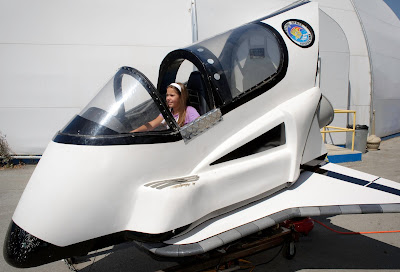
We all remember a moment in which a teacher or mentor made a difference in our lives. It could be a nod of encouragement, a helping hand, a lesson that inspired wonder or discovery, and ultimately may have given purpose and value to our lives. These moments of awareness are what educators and mentors at NASA Ames Research Center, Moffett Field, Calif. hoped to inspire in our new generation on July 26, 2010, when it celebrated scientific discovery and technological innovation as part of its Summer of Innovation initiative.
“Exploration Day” featured out-of-this-world missions and technology programs that brought students to NASA, so that they might experience a sense of awe and excitement while learning about NASA and its missions at the same time. “Our research community has done a tremendous job developing new and creative ways to engage young people in their fields,” said S. Pete Worden, director at NASA Ames. “They have been doing their part to speak at schools, to create hands-on learning opportunities as mentors, and to help spark that same curiosity in students which perhaps led them to pursue a career in science and engineering.”
NASA Ames organized a day filled with science, technology, engineering and mathematics (STEM) education hands-on activities and events, including a visit from the Traveling Space Museum (TSM), the “grand opening” of the renovated Ames Exploration Encounter (AEE), an opportunity to operate the rovers on a simulated lunar regolith and a student poster session of more than 100 students. TSM brought to Ames numerous hands-on activities, one of which was “moon boots.” Who wouldn’t want to simulate Neil Armstrong’s zero-gravity walk on the moon? By strapping on a pair of “moon boots,” young students walked with enough bounce to simulate a feeling of zero-gravity, or a less firm terrain.

NASA has given gamers a taste of lunar adventure with release of Moonbase Alpha, an exciting new, free online video game. The game has single and multiplayer options that allow participants to step into the role of an exploration team member in a futuristic 3-D lunar settlement. Players must work to restore critical systems and oxygen flow after a meteor strike cripples a solar array and life support equipment. Available resources include an interactive command center, lunar rover, mobile robotic repair units and a fully-stocked equipment shed.
The game is a proof of concept to show how NASA content can be combined with a cutting-edge game engine to inspire, engage and educate students about agency technologies, job opportunities and the future of space exploration. Moonbase Alpha is rated "E" for everyone.It is the first game in NASA's Learning Technologies project. The project supports the delivery of NASA content through interactive technologies such as virtual worlds, games and software applications to enhance science, technology, engineering and mathematics, or STEM, education.
Moonbase Alpha is a precursor to a planned NASA-based massively, multiplayer online game project. The project is being designed to have content and missions that require players to gain and demonstrate STEM knowledge to succeed. NASA released the game on Valve's Steam network. The agency will use the Steamworks suite of services for server browsing, leaderboards, statistics and more. Steam has more than 25 million accounts and has released more than 1,100 games.
 The National Summer Learning Association has recognized NASA Administrator Charles Bolden as a Champion of Summer Learning. The award honors Bolden's dedication to keeping America's middle school students engaged in science, technology, engineering and mathematics (STEM) through a new initiative called the Summer of Innovation.
Five leaders from across the nation who have invested in summer learning programs and helped increase public support for them will receive the award. "Bolden's leadership on the NASA Summer of Innovation program has resulted in a major step forward on two critical policy challenges facing our nation: summer learning loss and STEM education," said Ron Fairchild, CEO of the association.
Bolden officially kicked off the Summer of Innovation June 10 at NASA's Jet Propulsion Laboratory in Pasadena, Calif. Using content from NASA's missions and research, the program will engage thousands of middle school students in STEM learning during the summer months when many students experience "summer slide," or a loss of skills acquired during the school year. Summer of Innovation is a cornerstone of the Educate to Innovate campaign President Obama announced last November.
 NASA Administrator Charles Bolden kicked off the agency's new Summer of Innovation initiative Thursday while at the Jet Propulsion Laboratory in Pasadena, Calf.The Summer of Innovation program will engage thousands of middle school students in science, technology, engineering and mathematics (STEM) during the summer months when many students experience what's known as the "summer slide," a loss of skills acquired during the school year.
The program is a cornerstone of the Educate to Innovate campaign announced by President Obama last November. About 250 middle school students from the Los Angeles area participated in the kickoff festivities, which included an opportunity to interact with astronauts, NASA scientists and engineers, several hands-on educational activities; and a visit to the facility where the next Mars rover is being built. The students also were treated to musical entertainment provided by actor/rapper Daniel Curtis Lee.
"It is wonderful to feel the excitement generated by these students as they experienced first-hand what fascinating and challenging opportunities exist for students who follow STEM career paths," said Administrator Bolden. "I hope that by getting these students involved in NASA's missions and programs now, it may pave the way for a new generation of scientists and engineers, which is critically important to our nation's future."
 Astronaut Tracy Caldwell Dyson, orbiting 220 miles above Earth, will discuss living and working in space with students gathered at the Cradle of Aviation Museum in Garden City, N.Y., on Thursday, June 10. The call between the students and International Space Station crew member will take place at about 11 a.m. EDT.
The students participating are from Northside School, New Visions School, Wantagh Horizons Program, Westbury High School and Drexel Avenue School, all in New York.Reporters interested in attending the event should contact Andrew Parton of the Cradle of Aviation Museum at 516-572-4038.
This downlink event is part of a series with educational organizations in the U.S. and abroad to improve teaching and learning in science, technology, or STEM. It is an integral component of Teaching From Space, a NASA project that uses the unique environment of human spaceflight to promote learning opportunities and to build partnerships with the kindergarten through 12th grade education community.
 NASA Administrator Charles Bolden announced Tuesday the selection of Leland D. Melvin as the agency's new associate administrator for education, effective immediately. He succeeds James L. Stofan, who had served in an acting capacity since the spring. Since April 2010, Melvin has been assigned to the Office of Education at Headquarters leading the Education Design Team. His job was to develop a strategy to improve NASA's education offerings and to assist the agency in establishing goals, structures, processes and evaluation techniques to implement a sustainable and innovative science, technology, engineering and math (STEM) education program. He also served as the partnership development manager for the agency's new Summer of Innovation education initiative, aimed at engaging middle school students in STEM activities during the summer break.


